What is the best filtration system for drinking water?
The best system is the one certified to reduce the specific substance found in your water.
It must also meet the amount of water your household needs.
There is no single filter that is best for every home.
If there is no harmful substance to address and no taste concern, you may not need a filter at all, as the CDC explains.
Start with evidence.
Read the public water quality report or use a test from a certified lab.
Then check what the exact product is certified to reduce.
Match that claim to your water concern.
Also check where the filter goes, how much water it treats, and how to care for it.
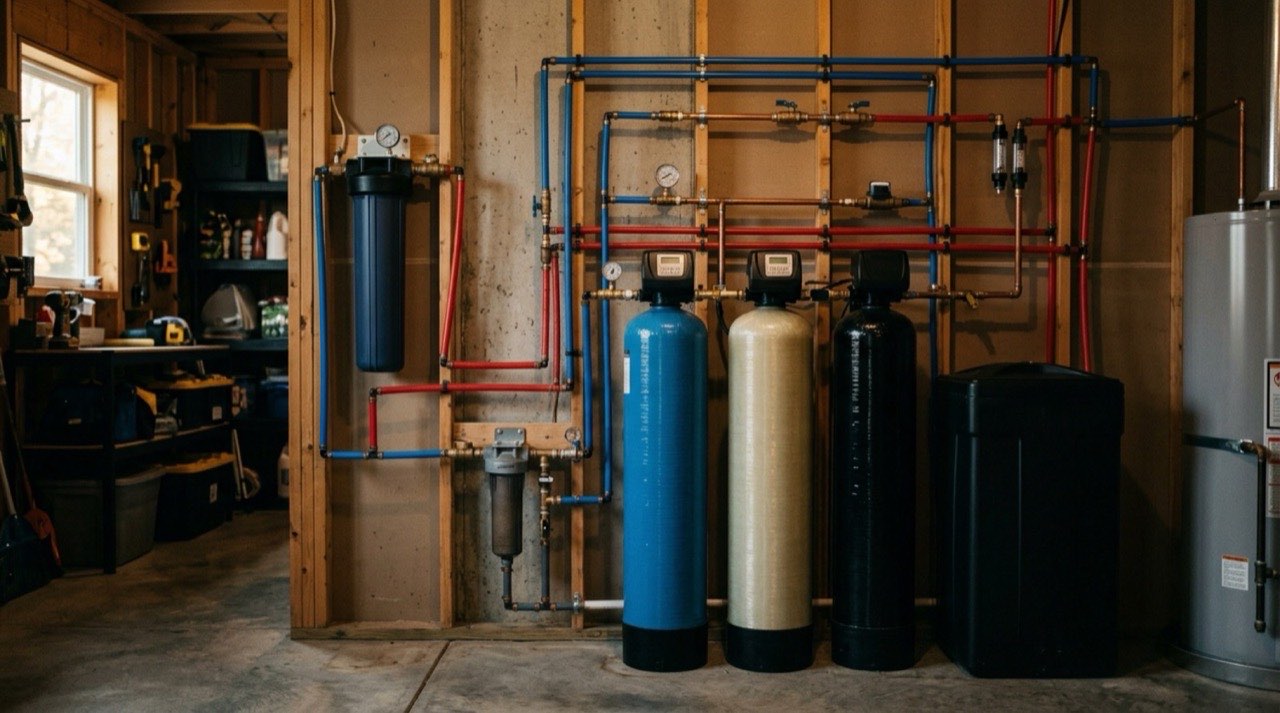
Define the Water Goal Before the Equipment
Bad taste, bits of sediment, lead, dissolved minerals, and germs are different concerns.
A filter that improves chlorine taste may not be certified for lead.
A membrane that treats dissolved substances may need another treatment step before it.
It also needs routine care.
The CDC guide to choosing home water filters advises testing water and selecting a filter for the harmful germs or chemicals of concern.
Taste, smell, and appearance alone do not prove whether water is safe.
This is why the answer to what is the best filtration system for drinking water begins with a target, not a brand or equipment size.
Point-of-Use or Whole-Home Treatment
A point-of-use system treats water at one fixture, often the kitchen sink.
It can fit a drinking and cooking goal without treating showers, laundry, and toilets.
Pitcher, faucet, countertop, and under-sink products fall into this broad group.
A point-of-entry system treats water where it enters the home.
It may fit a known concern that affects water at many taps.
Whole-home equipment also has higher flow demands and can change water reaching every fixture.
CDC notes that removing disinfectant such as chlorine from all household water can allow more germs to grow in plumbing.
The system design must account for that effect.
Treating the whole home is not always the better choice.
Understand Common Treatment Methods
Activated carbon is often used for taste and odor.
Check its certified claims to learn what it can reduce.
Sediment filters catch bits above a stated size.
Do not assume they also remove dissolved chemicals or germs.
Reverse osmosis uses a membrane and can reduce certain dissolved substances and germs.
The EPA point-of-use reverse osmosis overview explains that these systems connect to a single fixture.
They also produce a treated stream and a reject stream, so water use and drain routing matter.
Ultrafiltration, nanofiltration, disinfection, and specialty media serve other targets.
Do not assume any method removes a harmful substance.
Check the exact product label and certified claims first.
Read the Certification, Not Just the Technology Name
A certified claim applies to a named model and what it can reduce.
CDC lists NSF/ANSI Standard 42 for taste and odor, Standard 53 for health-related reductions such as cysts, Standard 58 for reverse osmosis, and Standard 62 for distillation.
A standard number alone is not enough.
Read the label for the exact substance, rated capacity, flow, replacement interval, and conditions of use.
Search the certifier's product database when possible.
When asking what is the best filtration system for drinking water, compare certified claims against the water evidence.
Do not assume that every product using carbon or reverse osmosis performs the same way.
Once you have a report and a target, Valley Plumbing's water filtration service gives Salt Lake City homeowners a place to discuss installation requirements.
Bring the exact reduction claim you need, rather than asking for the system with the most stages.
Use the Utility Report and Testing Correctly
Customers of a public water system can begin with the annual consumer confidence report.
It describes tested water quality across the public system.
A home test may still be useful when the concern involves building plumbing, a service line, a private well, or a change at one tap.
Use a lab certified to test for the substance of concern.
Follow the lab's sample steps.
Flushing, bottle type, where you draw water, and storage time can affect the result.
Avoid broad home strips for a decision they are not designed to support.
Follow any boil-water or do-not-drink notice from a health agency.
A home filter does not replace those steps unless that agency says it does.
Plan for Flow, Space, and Maintenance
Record how many fixtures need treated water and the expected peak flow.
Note available cabinet or mechanical-room space, drain access, electrical needs, water pressure, and the location of shutoff valves.
Every system needs service.
Cartridges can load with debris.
Tanks and membranes have set steps for cleaning or changing parts.
Without that care, a device may work less well or allow germs to grow.
Keep a care record.
List the model, certified claims, date it was put in, cartridge numbers, and service dates.
Use manufacturer instructions and keep replacement parts matched to the certified system.
Plan a follow-up check that matches the original concern.
You can notice a change in taste.
To check for a harmful substance, use the right test.
Keep the first test, certified product claims, and later test together.
Use those records to judge the result, not the way the water looks.
Questions to Ask Before Selecting a System
Bring these questions to the decision:
- Which measured substance are we trying to reduce?
- Is the exact model certified for that reduction?
- Is drinking-water treatment enough, or is whole-home treatment justified?
- What flow and pressure does the system require?
- Does it need pretreatment, a drain, or power?
- How often must media, filters, or membranes be changed?
- How will performance be checked after installation?
Those answers help you choose a filter for a clear reason.
Save them so you can check the choice later.
Work Through One Certification-Label Example
Suppose a lab test finds that lead is the concern at the kitchen tap.
This is an example of a selection decision, not a statement about water in Salt Lake City or your own home.
A label that names only chlorine taste and odor reduction does not answer that lead concern.
Look for the exact model in the NSF lead-reduction listings, then check the specified replacement element and capacity.
A familiar filter type or standard number is not enough.
The listing must name the substance you need to reduce.
Now keep three records.
The lab report names the target.
The certified listing shows what the product can reduce under its test conditions.
The care record shows when the right parts were changed and when service took place.
Each record answers a different question.
You need all three.
Before choosing a system, ask for its exact model number and performance data sheet.
Check which cartridge it needs to keep the certified setup.
Save those records with the setup guide.
When it is time for a new cartridge, choose by the model record.
Fit alone is not enough.
If the water concern changes, check your choice again.
A filter chosen for one target may not reduce a newly found substance.
Bring the new report to the utility, lab, or water treatment provider.
Ask whether the current filter still fits the need.
Choose Equipment Only When There Is a Clear Need
The best fit addresses the confirmed target, supplies the needed water, and can be maintained correctly.
A point-of-use option may fit a drinking-water goal; a whole-home proposal needs a reason to treat every fixture.
If the evidence shows no treatment need, pause the search.
More stages do not prove that a system is right for your home.
What is the best filtration system for drinking water in your home?
Let the evidence answer.
Identify the concern, verify the product claim, choose the right treatment point, and plan ongoing service.
For help matching current water evidence to an installed system across the Wasatch Front, use Valley Plumbing's water filtration page.