What is a furnace?
A furnace is a central heating appliance that creates heat and sends warmed air through ducts.
The thermostat starts the heating call, the furnace produces heat, and a blower moves air to the rooms.
That direct answer explains the job, but not the system around it.
A furnace depends on a return-air path, a filter, supply ducts, controls, and safety devices.
Knowing those boundaries helps a homeowner describe a problem without opening equipment or guessing which part failed.
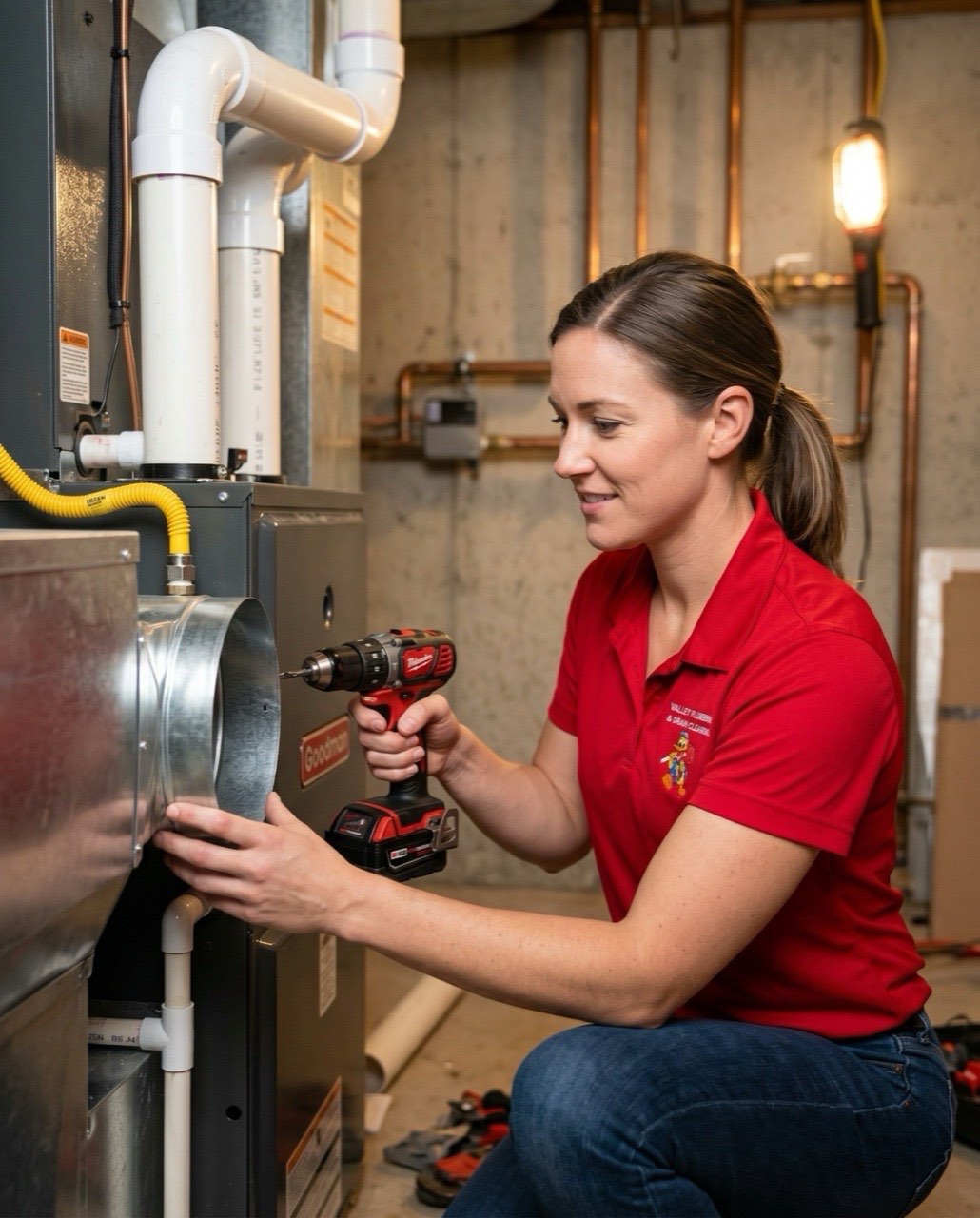
A Furnace Is One Part of a Forced-Air System
A furnace does not heat a room by direct contact.
It changes energy into heat inside a cabinet.
The blower then pulls cooler household air through return ducts, moves it across the heated section, and pushes warm air into supply ducts.
The Carrier furnace guide explains how a furnace creates heat and moves warm air through ducts.
A home may pair that furnace with central air conditioning because both systems can use the same blower and ducts.
They still perform different jobs.
This system view matters when asking what is a furnace.
A cold room might involve the furnace, but it can also reflect a closed register, a blocked return, a duct issue, or heat loss in that room.
How a Gas Furnace Creates Heat
A gas furnace begins when the thermostat calls for heat.
Controls verify that the operating sequence can start.
The ignition system lights the burners, and the burners warm a heat exchanger.
That metal boundary transfers heat while combustion gases follow the venting path.
After the heated section reaches the proper condition, the blower moves household air across it.
Warm air travels into the ducts.
When the thermostat is satisfied, the fuel stops and the blower may continue briefly to move remaining heat.
Fuel, flame, venting, line voltage, and safety controls make the interior a professional work area.
Do not remove panels, adjust burners, clean an igniter, or bypass a switch.
A shutdown may be a safety control doing its job.
How an Electric Furnace Differs
An electric furnace uses resistance heating elements rather than a burner and heat exchanger for combustion.
The blower still moves air through the system, so filters, returns, ducts, registers, thermostats, and controls remain important.
The lack of a flame does not make internal work safe.
Electric furnaces use high voltage and large electrical loads.
Homeowner checks should stay outside the cabinet and follow the manual for the exact model.
When people ask what is a furnace, the fuel type is therefore part of the answer.
Record whether the data plate identifies gas, propane, oil, or electric equipment.
Do not infer the type only from the thermostat.
The Main Parts and Their Roles
The thermostat requests heat.
The control board manages the sequence.
Gas equipment has ignition, burners, a heat exchanger, and venting.
Electric equipment has heating elements.
Both types commonly have a blower, filter path, limit controls, and connections to the duct system.
A filter protects the equipment and supports airflow.
It is not a repair for every symptom.
A blower that runs with cool air, a unit that stops early, and weak airflow can each have several causes.
Carrier's furnace troubleshooting guide identifies the thermostat, power switch, and clogged filter as basic items to review.
The guide also connects restricted airflow with poor comfort and possible shutdown.
Use the installed model's manual before any owner step.
If the system will not start or repeatedly stops, Valley Plumbing's furnace repair service can help homeowners in Salt Lake City and nearby service areas arrange an evaluation.
Describe the symptom without guessing which internal part needs replacement.
What You Can Observe Safely
Keep the cabinet closed.
Confirm the thermostat is set to Heat and above room temperature.
Look at an owner-accessible filter, open registers, and clear return grilles.
Check the normal furnace switch and labeled breaker position without touching wiring.
Write down the order of events:
- Does the thermostat show a heating call?
- Does the blower start?
- Does warm air reach any register?
- How long does the cycle run?
- Does a visible light show a code?
- Is there a new sound, odor, or repeated stop?
Record a tripped breaker and request qualified help.
Do not repeatedly reset it or remove an electrical cover to investigate.
When to Stop Instead of Troubleshoot
Leave the building if you suspect a fuel leak.
Avoid switches and flames in the area, then contact the utility or emergency services from a safe place.
If a carbon monoxide alarm sounds, get everyone outside immediately, then call the fire department or 911 from outdoors.
NFPA alarm guidance hosted by CPSC gives that leave-first response.
Do not silence the alarm and continue troubleshooting indoors.
Turn equipment off only when that can be done safely if you see smoke, soot, scorching, damaged wiring, or water near electrical parts.
Do not keep resetting a fault.
Do not tape a switch closed or try to watch combustion through an opened cabinet.
These limits are part of understanding what is a furnace.
The appliance is designed to stop when required conditions are not met.
Defeating that response removes protection rather than solving the cause.
Separate Air Movement From Heat Production
Think about two different observations: whether air is moving, and whether that air is warming the occupied rooms.
A blower running by itself does not establish that burners or heating elements are operating.
Likewise, a warm cabinet does not tell you that air is reaching each room as intended.
For example, a useful report is, "Air comes from the living-room register, but the room remains below the thermostat setting."
A second useful report is, "The upstairs bedroom has weak airflow while the hall is warm."
Neither statement names a failed part.
Both distinguish a whole-system complaint from uneven delivery.
Keep observations comparable: note the thermostat setting and the rooms involved during the same heating call.
Avoid opening equipment to make the story more complete.
If the filter location or data plate requires panel removal, leave that information for the service visit.
Build a Useful Equipment Record
Photograph the data plate from a safe location.
Record the manufacturer, model, serial number, fuel type, filter dimensions, and best-known installation date.
Keep the owner manual with that record.
Add a short symptom timeline before requesting help.
Note rooms affected, outdoor conditions, thermostat settings, and whether the fault began after a power interruption or filter change.
These observations help a technician plan tests without turning a symptom into a remote diagnosis.
Use the System Model to Describe the Problem
What is a furnace in practical terms?
It is the heat-producing and air-moving center of many ducted homes, controlled by a thermostat and protected by safety devices.
It works with, rather than apart from, the filter and duct system.
That model gives a homeowner a better way to report trouble.
Say whether the thermostat called, the blower ran, warm air arrived, or the cycle stopped.
Keep the cabinet closed and leave fuel, combustion, wiring, and safety-control work to a qualified technician.
For persistent furnace concerns, request help through Valley Plumbing's furnace repair service.
Valley Plumbing serves Salt Lake City, Sandy, Draper, Lehi, Provo, Orem, and nearby service areas.