Low water pressure after a filter change needs a clear record. Note where it happens and when it began.
Start by noting which outlets slowed down and whether the change began at once or developed later.
Do not open a filter housing, adjust a pressure control, or move an unknown bypass valve to test a guess.
People often call a slow stream “low pressure.” For this first check, describe what you can see: a slow filtered faucet, a slow refrigerator dispenser, or weaker flow at several fixtures.
That is enough to make the first service conversation more useful. It does not require a gauge or access to internal parts.
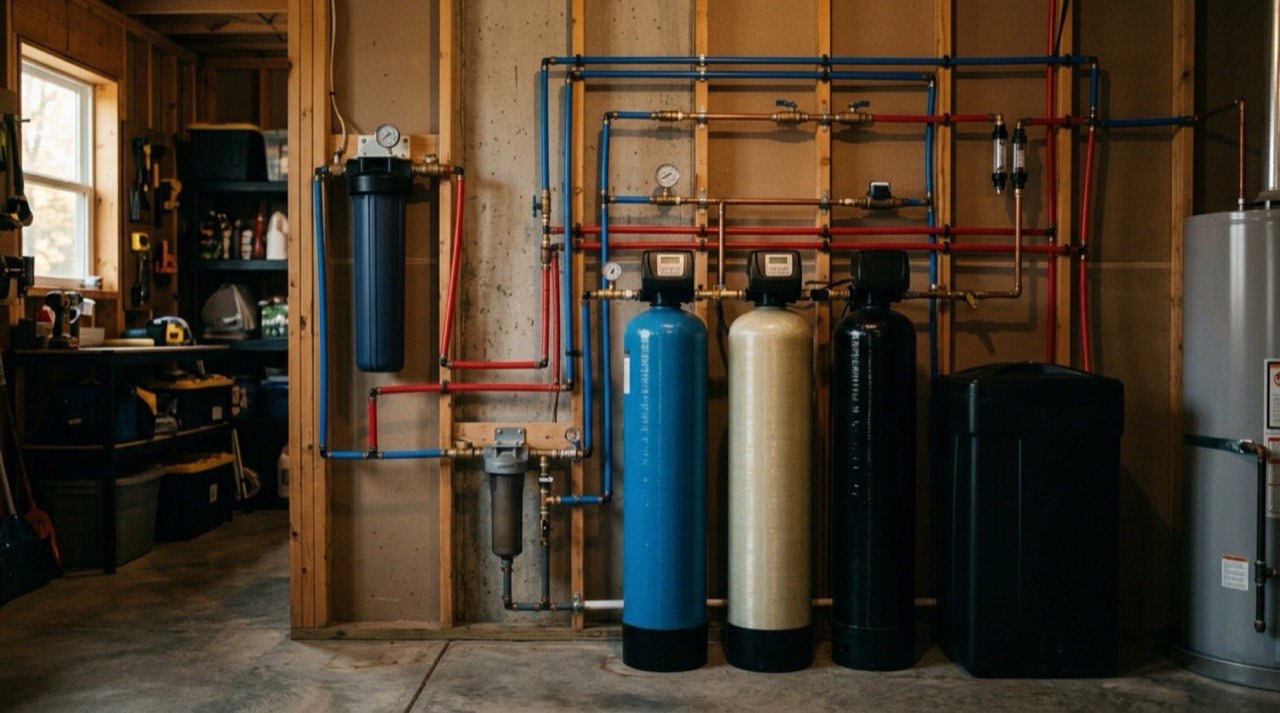
Stop if There Is a Leak or Another Immediate Concern
Check for visible water around the equipment from a dry, safe position.
If water is near electrical parts, do not touch the device or stand in the water.
Get qualified help. Follow any active water advisory, and do not use a flow test as a way to decide whether water is safe.
If the filter is leaking or its housing looks damaged, stop troubleshooting it yourself.
Do not tighten a pressurized housing or remove a cartridge to see what happens.
Tell the service provider what changed and whether water is escaping.
If there is no immediate hazard, keep the checks below to ordinary fixture use and document review. They are meant to describe the issue, not repair it.
Identify the Equipment That Was Changed
Find the system model and the cartridge part number on a receipt, package, or accessible label. Record who changed it and when.
“The filter under the sink” may refer to a different type of equipment from a whole-home unit or a refrigerator cartridge.
NSF's filter-replacement guidance explains that replacement cartridges are not universally interchangeable. A cartridge may fit but still be the wrong part.
Confirm the exact part with the manufacturer or installer.
Keep any startup or flushing instructions with the record. Do not borrow a volume or procedure from a different brand's video.
If the model is unknown, ask for identification before attempting service.
Note Which Outlets Changed
During normal use, note whether the concern is limited to a dedicated filtered outlet or also affects other fixtures. Do not run every faucet at once.
A simple location list is more useful than an uncontrolled test.
For example:
- The drinking-water faucet is slower, but the ordinary kitchen faucet seems unchanged.
- The refrigerator dispenser slowed immediately after its cartridge was replaced.
- Several fixtures changed after work on a whole-home filter.
- The flow was normal at first, then declined over time.
Each statement points to a different starting question. None proves that the new cartridge is defective.
A service provider still needs to check the installed system and its requirements.
If the change persists, Valley Plumbing's water filtration service can help arrange an assessment.
Share the fixture list and part numbers so the visit begins with the right equipment.
Keep Immediate Changes Separate From Gradual Ones
A change that begins directly after replacement makes the service event important context.
Record it without assuming that the cartridge is the only possible cause.
Installation, the exact replacement part, and the model's startup procedure all need review.
A gradual decline has a different history. NSF notes that captured material can restrict flow as a filter loads.
That is a reason to review the service schedule, not permission to reuse or modify a spent cartridge.
Ask the installer which startup steps were completed and which owner checks remain. Keep that answer with the service record.
If the answer conflicts with the manual for your exact model, ask the manufacturer to clarify before changing anything.
Leave Internal Checks to the Right Person
Do not loosen fittings, open a tank, or change pressure settings.
Do not bypass treatment without knowing what the system treats and what the manufacturer requires.
A stronger stream would not prove the water still gets the treatment it needs.
If the manual identifies a simple owner check that you can perform safely, follow that exact instruction.
Stop when it requires access, tools, or knowledge beyond normal use.
Keep a note of anything you did so the next person does not have to guess.
This also keeps things as they were before service. Several changes with no notes can make the issue harder to trace.
Give the Service Provider a Useful Note
An illustrative note might read: “The dedicated drinking faucet became slower after yesterday's cartridge change. The main kitchen faucet seems unchanged.
We have the replacement package and made no valve adjustments.” Add the actual model and part numbers when available.
For a home in Salt Lake City, Lehi, or Provo, contact Valley Plumbing through its water filtration page.
Bring the timing, affected outlets, and service records.
Those details help separate a filter-specific concern from a broader water-flow problem without guessing at a repair.