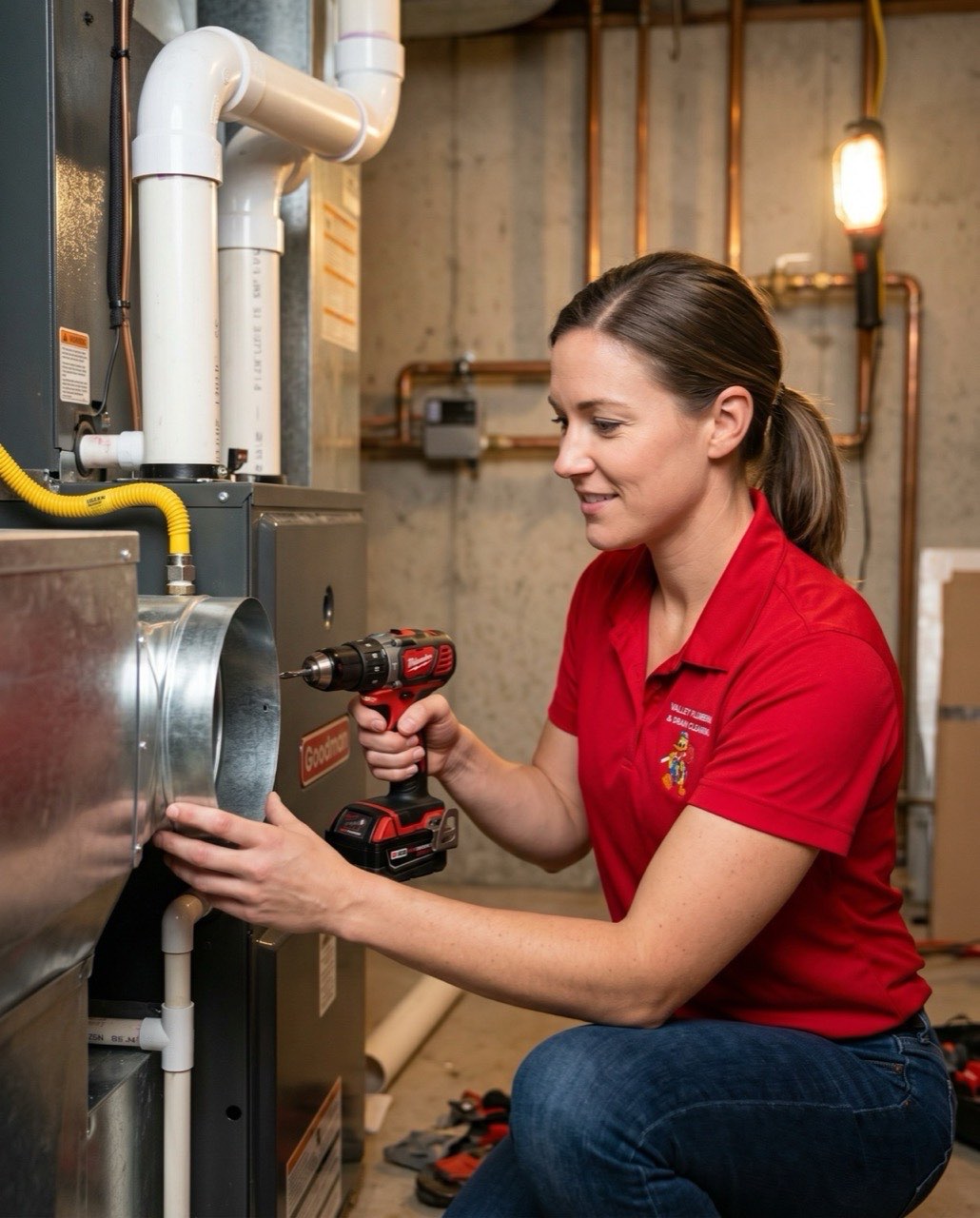
Furnace short cycling can mean repeated heating stops before your home reaches the thermostat setting.
This is a pattern to report, not a diagnosis. Record whether the heat request remains active, whether air keeps moving and whether the room warms.
Do not use a fixed number of minutes to diagnose the problem or keep resetting the furnace to make it run longer.
Salt Lake City homeowners can gather useful clues with the furnace closed. Leave fuel and flame controls alone.
Decide whether heat stops before the thermostat is satisfied
Read the room temperature and target on the thermostat. Note whether a heating symbol or message remains on when you notice the stop.
Check for an active schedule or hold that could change the target.
Trane describes furnace short cycling as repeated operation that ends before the expected heating task is complete.
Its furnace short-cycling guide identifies several possible causes, including airflow restrictions and controls.
These causes need to be tested. A short run does not prove that the furnace is too large.
It also does not tell you that a sensor failed or that you need a new unit.
Note whether the behavior is new.
If it began after a thermostat change, filter replacement or power interruption, include that event in the history without assuming it caused the fault.
Separate normal blower movement from a heat cycle
The indoor blower and the furnace's production of heat are different things to observe.
Air may continue moving even when you think the heating part of the cycle has stopped.
Describe what you can actually hear or feel: the sound changes, air stays moving, or the room remains below the target.
Avoid calling a sound a specific burner or motor unless you know what it is.
For example, imagine a Salt Lake City homeowner who hears a change in sound while air continues through the vents.
The useful follow-up is whether the thermostat still requests heat and whether the room warms. Opening the furnace to watch its operation is unnecessary and unsafe.
If the pattern repeats and comfort is not restored, request Valley Plumbing furnace repair. Bring the sequence rather than a guessed diagnosis.
Look for simple airflow restrictions
With the system off, inspect the filter only as the owner instructions permit. Record its condition, size and type.
If replacement is due, use the specified filter and installation direction. Do not run the furnace without a filter to see whether it stays on longer.
Look around supply vents and return grilles for rugs, storage or furniture blocking ordinary airflow.
Move simple obstructions you can safely reach, but leave hidden dampers and duct changes to a professional.
Trane's guidance includes restricted airflow among the possible reasons for repeated heating stops.
That is a reason to check accessible basics, not proof that the filter explains every short cycle.
If your filter access is unclear or requires opening an unfamiliar equipment compartment, leave it for the service visit.
Keep a short sequence record
Write down four points from an event you already saw:
- Thermostat target.
- Displayed room temperature.
- What stopped.
- What continued.
Add whether the room was getting warmer before the stop.
Rough timing can help explain the pattern. Do not compare it with a fixed rule for how long a furnace should run. Units and controls vary.
You do not need to remain beside the unit or trigger another cycle to make the report valid.
A helpful note might read: “Heat display stayed on, air kept moving, and the room remained below target after the sound changed.”
It is a hypothetical example of a note, not an identification of a failed part.
Save any visible control message. Do not clear it through repeated power resets before the technician can use the details.
Stop repeated tests and unsafe adjustments
Do not bypass a safety switch, adjust a gas valve or remove a cover to make the furnace run. Stop further testing when the same fault recurs.
A breaker that trips again and again also needs professional attention.
If you smell gas, leave immediately and call 911 and the utility from outside. Do not operate switches inside. Follow Enbridge Gas's emergency guidance.
If a carbon monoxide alarm sounds, leave the building and call 911, as directed in the CDC's safety guidance. Do not stay to finish your notes.
When the home cannot stay comfortably warm, use another heated location while arranging help. Never use a gas oven as a room heater.
Use the record to arrange furnace service
Tell the service provider that the furnace stops before the thermostat target is reached, if that is what you observed.
Include whether the blower continues, any visible message and the changes you made before the problem began.
Keep the equipment accessible, but do not dismantle it in preparation for the visit. The technician needs to test how the control and furnace work together.
For repeated furnace short cycling in Salt Lake City, contact Valley Plumbing for furnace service.
Your record helps focus the diagnosis while keeping combustion and electrical testing in trained hands.