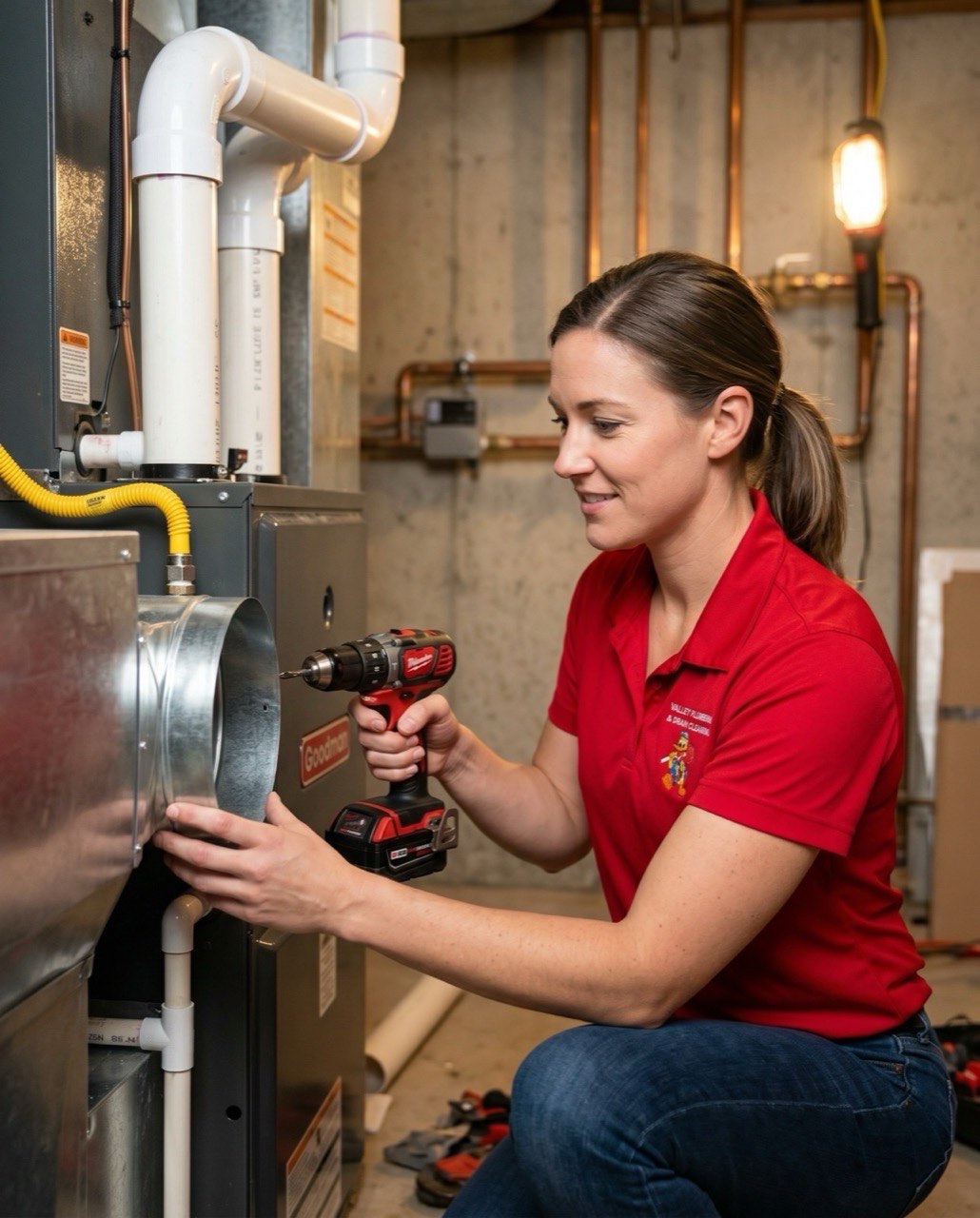
For a furnace leaking water during heating season, stay clear of wet electrical equipment. Stop heating at a safely accessible thermostat.
Note whether the furnace was running and where water first appeared. Some furnaces make water, called condensate, as they run.
A puddle can also come from nearby units or pipes. Do not choose a repair before the source is identified.
For a Salt Lake City homeowner, “water beside the furnace while heating” is a useful starting description. It is not a confirmed drain diagnosis.
Treat water near powered equipment cautiously
Observe from dry ground. Do not walk through water to reach a switch, touch wet controls or open an electrical panel.
Keep children and pets away from the area.
If you can safely reach the thermostat, turn heating off. When safe access is uncertain, ask for professional help rather than approaching the wet equipment.
Move nearby belongings only if the area is safe. Cleanup can reduce a small mess, but it does not correct the leak.
If water is spreading toward electrical equipment or causing structural damage, describe that urgency when you call.
Gas odor or a carbon monoxide alarm changes the response completely. Leave the building and seek emergency assistance from outside before investigating the water.
Identify the operating mode before choosing a cause
Note whether the thermostat was set to heat, cool or fan-only when you discovered the water.
The cabinet may connect to several parts of the heating and cooling system.
Its location does not tell you which part leaks.
Lennox explains that high-efficiency condensing furnaces produce water during operation, while other nearby sources can create a similar visible puddle.
Its furnace water-leak guide discusses condensate drainage, humidifiers and cooling equipment as possible areas to investigate.
Do not guess the furnace type from an old sales pitch.
If an accessible label or your owner's manual provides the model, save those details for the technician.
For an unresolved leak during heating, arrange Valley Plumbing furnace repair and explain the operating mode.
Compare the furnace with nearby water sources
Look from a safe distance for nearby pipes, a water heater or another appliance.
If a humidifier is present, mention it, but do not assume every furnace has one.
Note whether water seems to start above the furnace, beside a tube or farther away and flow toward the cabinet.
A sloped floor can move water away from its source. The largest puddle may not be where the leak began.
For example, imagine a Salt Lake City homeowner finding water beside the furnace after a heating cycle.
If a nearby pipe is also wet, both notes belong in the service request. One should not be ignored to make the story fit a drain problem.
Do not disconnect a hose or operate an unfamiliar valve to test the idea. The next step is to find the source and path safely.
Record the edge of the wet area without opening covers
A photo from dry ground can show the equipment, nearby pipes and the first visible wet spot. Save the time with the image.
Do not reach over wet equipment to improve the angle.
Write down:
- Whether the water appeared suddenly.
- Whether you have noticed it before. Include any recent work, filter change or control adjustment.
If you do not know when it started, say so.
Notice whether the wet area continues to spread after heating is off. Watch only from a safe place. Do not wait beside a wet unit.
If the situation is worsening, seek help.
You do not need to remove a panel, trace a tube behind the furnace or collect water to prepare for a visit.
Leave internal access to the technician.
Avoid drain repairs and repeated heating tests
Do not pour cleaners into an unidentified drain or disconnect condensate tubing based on general advice.
The correct procedure depends on the equipment and the actual source of the water.
Do not bypass a switch or restart the furnace again and again to see whether it leaks again.
A dry floor after shutdown does not show that the underlying issue is fixed.
If you smell gas, leave and call 911 and the utility from outside. Follow Enbridge Gas's emergency instructions.
If a carbon monoxide alarm sounds, leave and call 911; the CDC's guidance makes that response clear.
Use another heated location if the home cannot stay comfortable while the furnace is off. Do not use a gas oven for room heat.
Request the right kind of inspection
Describe the visible water and its timing without naming an unconfirmed repair: “The furnace was heating, water appeared here, and these other pipes or appliances are nearby.”
Add whether water is near electrical parts or continuing to spread.
If the source turns out to be unrelated plumbing, the service provider can discuss the appropriate next step. Say what you do not know.
That helps more than asking for a part before the cause is found.
For water near a furnace in Salt Lake City, contact Valley Plumbing for furnace service.
Ask for the source to be identified before deciding what work is needed.