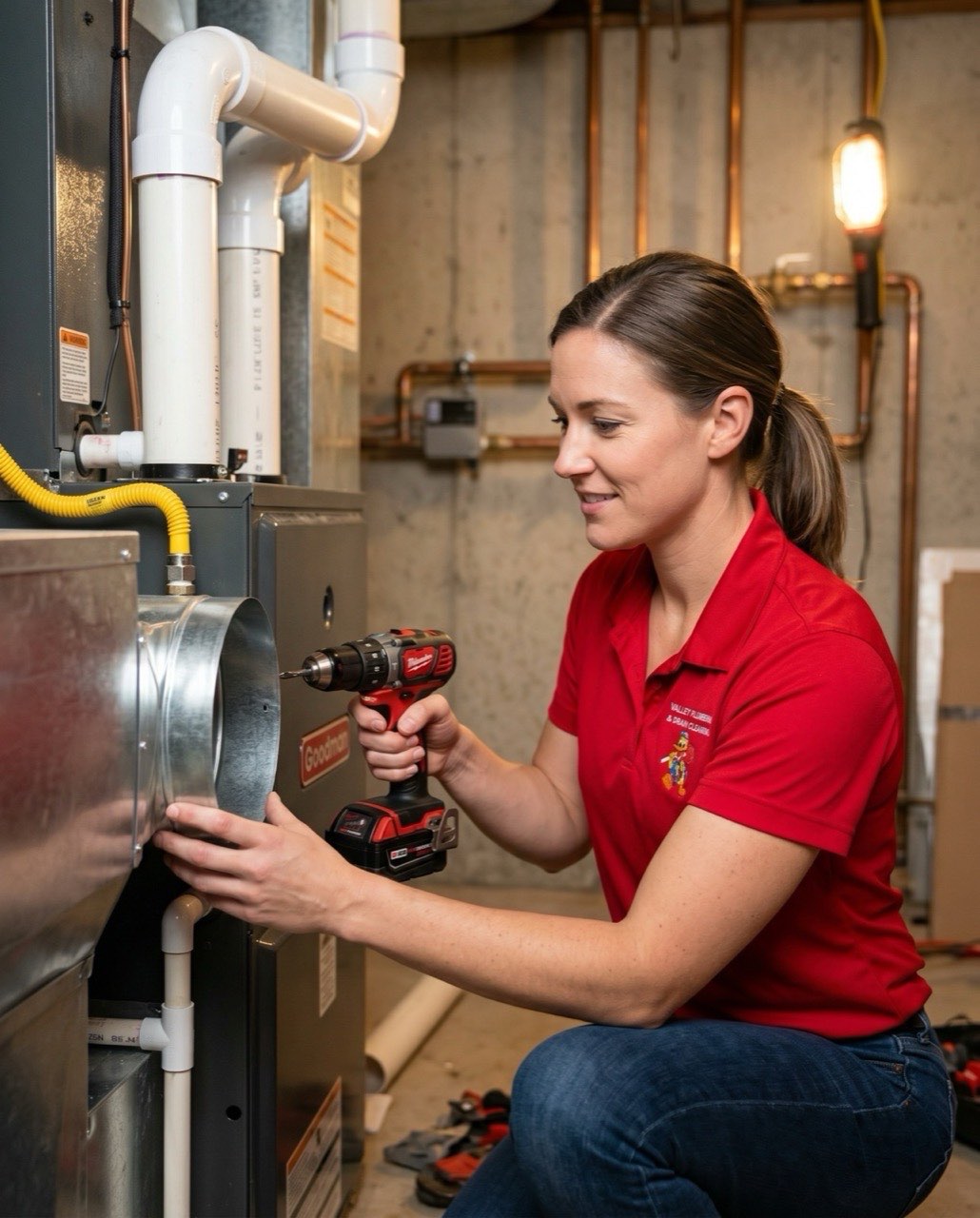
For a furnace blowing cold air, check whether the thermostat is asking for heat or only running the fan.
Air that feels cool between heating calls is different from a furnace that never warms the house.
Observe the control display and the room's response without opening the furnace, relighting anything or repeatedly resetting power.
For a Salt Lake City homeowner, the safest useful report describes when the cool air occurs, not which part you think failed.
Rule out urgent warning signs first
If you smell gas or suspect a leak, leave the building. From a safe location outside, call 911 and the gas utility.
Do not operate switches or use a phone inside. Enbridge Gas's Utah emergency instructions explain the response.
If a carbon monoxide alarm sounds, leave and call 911. Do not stay inside to inspect the furnace.
The CDC's carbon monoxide guidance gives this same immediate action.
These conditions take priority over every check below. A furnace repair appointment is not a substitute for emergency assistance when there is an immediate hazard.
Without those warning signs, limit your observations to the thermostat and areas that the owner instructions allow you to access safely.
Separate the fan setting from a heat request
Check the thermostat's mode, room temperature, target and fan setting. Confirm that heat is selected and that the target is above the displayed room temperature.
A fan setting of “On” can keep air moving between heating calls.
Carrier explains that this may make the air feel cool even though the fan is doing what the control requests.
Consult your thermostat instructions before changing its setting.
See Carrier's furnace cold-air guide.
Record any schedule, hold or message on the screen. A photograph can preserve the exact wording.
Do not remove the control from the wall or inspect its wires.
Keep the heat target steady while observing ordinary operation. Raising it repeatedly makes the sequence harder to describe and does not identify the source of the problem.
Compare startup air with persistent cool air
Note whether cool air occurs briefly near the start of a heating call, between calls or throughout operation.
Then note whether the room eventually reaches the thermostat's target.
Carrier's guidance distinguishes normal startup behavior from problems that prevent heating.
The timing varies by equipment, so use the owner's instructions rather than a universal number of seconds.
For example, imagine a Salt Lake City home where the fan moves air between calls, but the room reaches its target during heating.
That report differs from a room that keeps getting colder while the heat indication stays on. Neither example lets you diagnose the ignition system from a vent.
If the house does not warm, request Valley Plumbing furnace repair. You do not need to identify a failed component before asking for help.
Check an accessible filter and airflow paths
With the system off, inspect the filter only where the owner instructions permit safe access. Note the size, type and visible condition.
Follow those instructions for replacement and never operate the furnace with the filter removed as a test.
Look for furniture or rugs blocking room vents and return grilles. Move ordinary obstructions you can safely reach. Leave hidden dampers, wiring and equipment covers alone.
Report whether the problem began after a filter change or other work. That timing is useful, but it does not establish cause.
A clean-looking filter also does not rule out an internal heating problem.
Do not attempt to clean a flame sensor, adjust a gas valve or relight a burner based on general online instructions.
These checks require equipment-specific knowledge and proper safety procedures.
Record what happens without opening the furnace
Use a short sequence:
- Thermostat asks for heat.
- Sound begins.
- Air moves.
- Room warms or does not warm. Include any control message you can read without removing a cover.
Listen only from your usual safe location. Do not press an access-panel switch or hold a door open to watch a burner.
Do not cycle power to erase a fault message before you record it.
If the furnace repeatedly tries to start without producing heat, stop further tests and arrange service. If it trips a breaker, do not keep resetting it.
While waiting, use another comfortably heated location if needed. Never use a gas oven to heat the house; the CDC guidance warns against that practice.
Request help with a specific heating symptom
Tell the service provider when the cool air appears, what the thermostat displays and whether the room reaches its target.
Include any recent outage, filter change or unusual sound.
Keep the distinction clear: “The fan runs but the room does not warm” describes a problem without assuming which part needs repair.
For a furnace blowing cold air in Salt Lake City, contact Valley Plumbing for furnace service.
A focused description helps the technician test the heating sequence and recommend the next step.