If your furnace blower keeps running after the heat stops, first check what the thermostat is asking the fan to do.
A fan set to On can keep moving air between heating calls.
Continued airflow alone does not prove that the furnace is still making heat or that a part has failed.
The useful distinction is between an expected fan setting, the end of a heating cycle, and a new pattern that does not match the equipment manual.
You can record that difference without opening the furnace.
For a Salt Lake City home, that record also gives a service provider a clearer description than “the furnace never shuts off.”
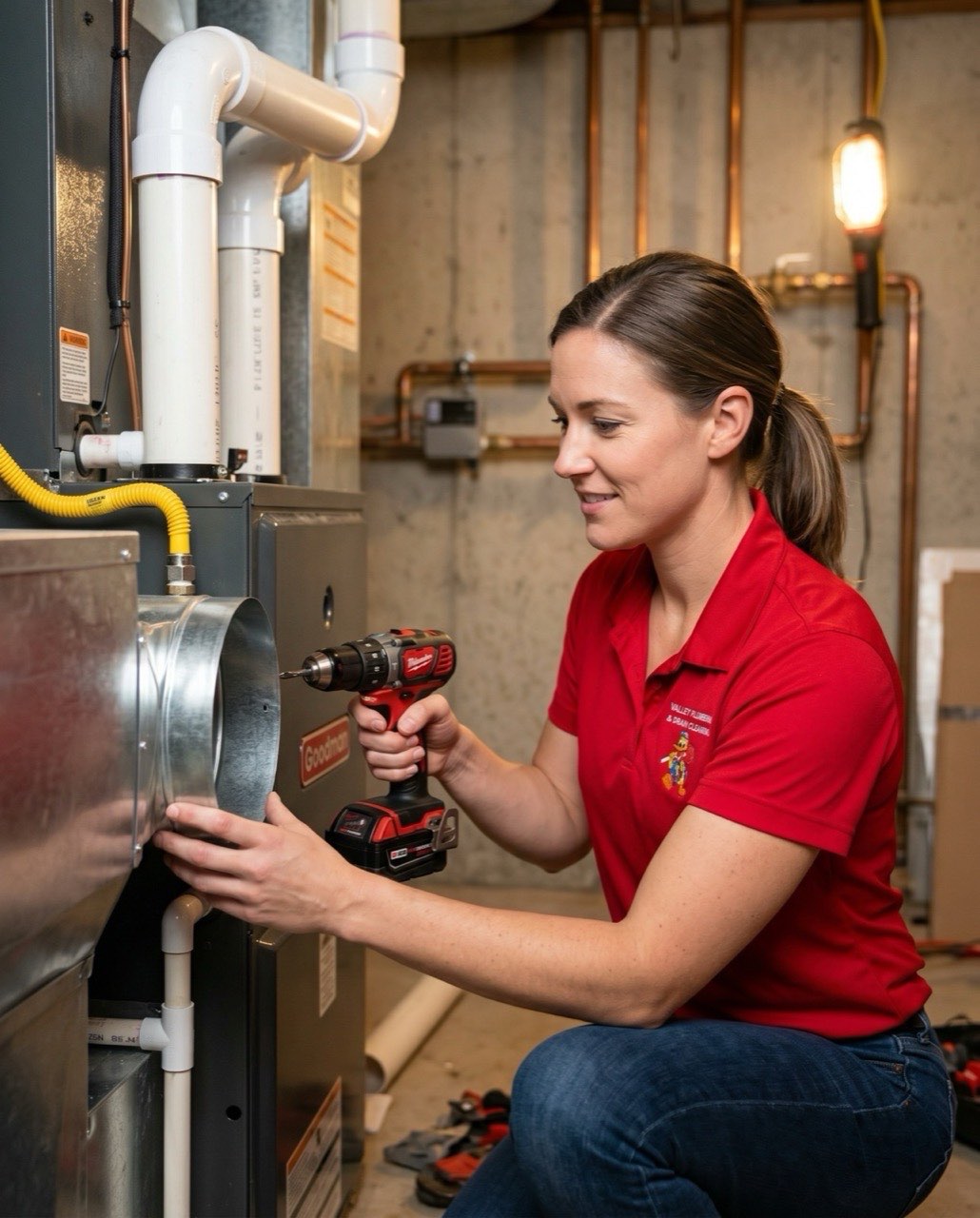
Check for a Hazard Before Checking Settings
Stop this checklist if there is smoke, a strong burning odor, sparking, or water near electrical parts.
Move away from the hazard and get appropriate emergency help.
Do not touch wet equipment or open a cabinet to find the cause.
If you suspect a gas leak, follow Enbridge Gas emergency guidance: leave without using switches or a phone in the affected area.
Call the utility or emergency services from outside.
If a carbon monoxide alarm sounds, get everyone outdoors and call the fire department. Follow the NFPA alarm guidance hosted by CPSC.
A fan running is never proof that the air is safe.
These conditions take priority over finding a thermostat setting. Do not stay indoors to photograph a display when an alarm or suspected leak requires leaving.
Read the Fan Setting Separately From the Heat Setting
Many thermostats have separate controls for system mode and fan mode. “Heat” tells the system which job to perform.
“On,” “Auto,” or a circulation schedule tells it how to operate the fan. The exact choices depend on the installed thermostat.
Trane's furnace guide identifies a fan set to On as one reason for continuous airflow. That is different from the burners staying on.
Read the owner manual before changing a setting, especially if the home has a programmed circulation schedule.
Write down the current setting first. If the manual allows changing On to Auto, make that single change and note the result.
Avoid changing the temperature, schedule, mode, and fan setting together. Otherwise, you will not know which change affected the pattern.
Follow One Ordinary Cycle From Outside the Cabinet
Use the thermostat display and airflow at a normal room register.
Do not remove a panel to look for flame, touch hot parts, or reach through an opening.
Record these four details during ordinary use:
- The displayed room temperature and target temperature.
- Whether the thermostat still shows a call for heat.
- Whether air continues to move after that display changes.
- Whether the fan eventually stops or continues until another heating call.
Keep the time notes, but do not compare them with a universal online countdown.
Furnace controls and thermostat functions vary. Carrier's cold-air guide describes conditions in which the blower operates while burners are off.
The installed model's sequence matters.
If the furnace blower keeps running in a new or unexplained way, Valley Plumbing's furnace repair service can help arrange an assessment.
Share the settings and sequence instead of requesting a specific replacement part.
Separate Three Different Observations
The fan runs with On selected. This may reflect the requested setting. Check whether anyone changed it for air circulation.
A recent thermostat change is useful context, not proof of a wiring problem.
The fan continues after a heating call, then stops. Compare that sequence with the model manual.
Record whether it is the usual pattern or something that began recently.
Avoid deciding that it is abnormal based only on how the air feels at one vent.
The fan keeps running despite the expected settings. Arrange service if the pattern persists or the home no longer warms normally.
Internal controls, wiring, and safety devices need qualified testing.
Do not disconnect thermostat wires, press internal switches, or bypass a door switch.
These observations identify what needs explaining. They do not identify a failed motor, board, or limit switch.
Make the Service Note Specific
An illustrative note might read: “The thermostat fan is set to Auto. The heat symbol went away, but airflow continued. This began after a power interruption.
No panel was opened.” Add the times you actually observed and whether rooms stayed comfortable.
A second household might report that the fan stops after switching a documented circulation setting off.
That is a different result, even if both households began with the same complaint.
Keep the original setting in the record so the technician can review the intended operation.
Include the thermostat model and the furnace model if they are available without opening equipment.
An old invoice or owner manual can help when the label is not accessible.
Do not guess the model from a similar photo online.
Know When the Observation Is Enough
You do not need to recreate the issue all day. Once you have one clear sequence, stop changing controls.
If normal heating is unavailable, make a safe plan to keep people warm while arranging service. Repeated resets are not a substitute for diagnosis.
For persistent fan operation in Salt Lake City, Sandy, or Draper, contact Valley Plumbing through its furnace repair page.
Bring the fan setting, heating-call sequence, and any recent change.
For gas odor, smoke, or a carbon monoxide alarm, leave first and seek emergency help.