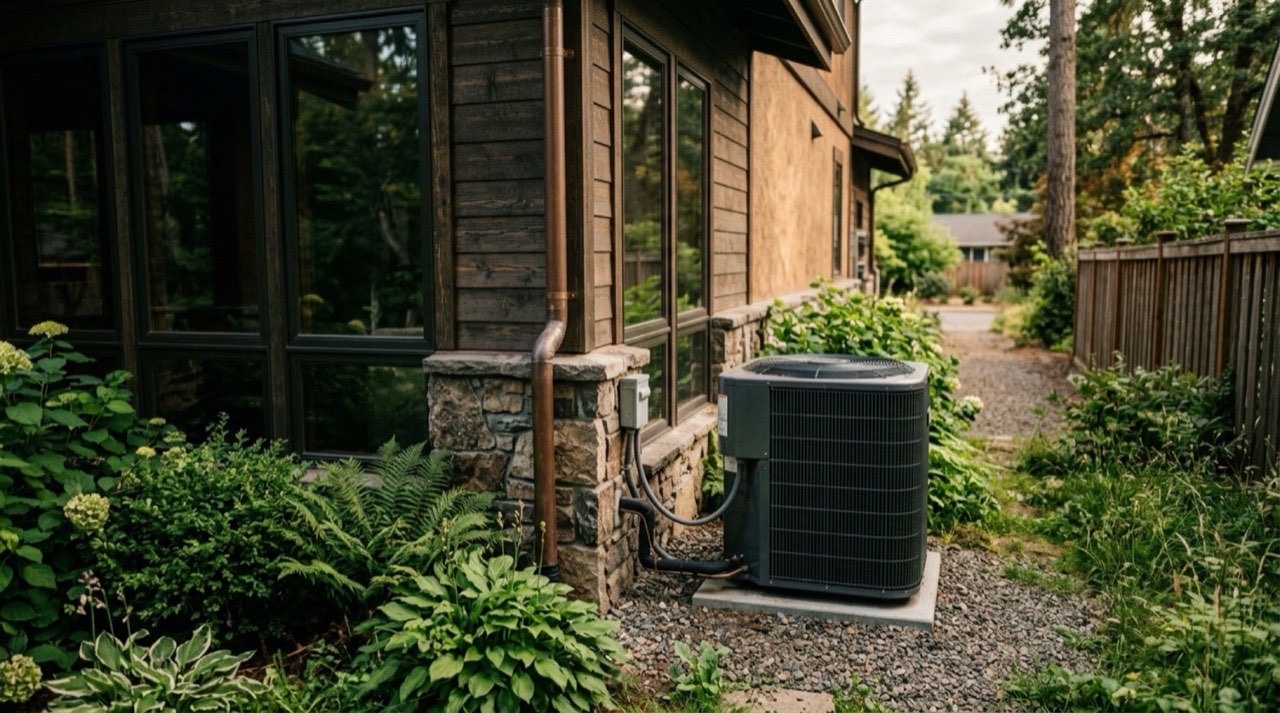
AC short cycling means the system repeatedly starts and stops without completing the cooling it needs to do.
Check whether the thermostat is still asking for cooling when it stops, and note whether the room reaches its target.
Do not diagnose short cycling from a single brief run or assume that every air conditioner should follow the same schedule.
For Salt Lake City homeowners, a clear record of the start-and-stop pattern is more useful than a guessed component failure.
Describe a cycle before calling it short cycling
Separate three things you can observe: air movement indoors, sound from the outdoor unit and the thermostat's cooling indication.
These may not begin or end at exactly the same moment.
Carrier describes short cycling as frequent starts and stops before a normal cooling cycle is completed.
Its AC short-cycling guide lists multiple possible causes, including airflow, controls and equipment conditions.
That list is not a way to identify the failed part from the driveway. A sound stopping outdoors does not, by itself, tell you why it stopped.
Record the sound and the room's response separately.
If the system has always behaved this way, mention that. If the pattern began suddenly, include when you first noticed the change.
Match the stops to the thermostat reading
Look at the displayed room temperature, the target and the mode. Note whether the cooling symbol or message changes when the equipment stops.
Check for a schedule or hold that could have changed the target.
Leave the setting steady while you gather those observations. Lowering the target repeatedly adds another variable and makes the pattern harder to describe.
A control may also pause to protect the unit.
Honeywell Home explains that a flashing cooling message or “Wait” display can indicate an equipment protection delay on applicable thermostats.
Follow the instructions for your exact model. Honeywell Home's delay guidance helps distinguish that message from a request to reset the system.
Do not clear a delay by repeatedly turning power off and on. Record the message instead.
Check external airflow without changing several things
With cooling off, inspect the accessible filter if the owner instructions allow it. Note its type, size and visible condition.
Replace it only as the manual directs, and keep a filter in place during operation.
Check whether furniture covers a supply vent or return grille.
Move ordinary obstructions you can safely reach, but do not adjust hidden dampers or open the equipment cabinet.
Make one permitted change at a time and record it. If you replace a visibly dirty filter, say so when you call.
That does not prove the filter caused every stop or rule out another fault.
When the system continues to stop before the home cools, arrange Valley Plumbing AC repair instead of extending the experiment.
Record the sequence, not a magic runtime
Use a short note with four entries:
- Time.
- Thermostat display.
- What you heard or felt.
- Room response.
You can record an existing event without waiting beside the system for another one.
For example, a Salt Lake City homeowner might write: “Cooling symbol stayed on, outdoor sound stopped, indoor air kept moving, and the room remained above the target.”
This is a hypothetical description, not proof of a thermostat, motor or refrigerant fault.
Another homeowner might report that the cooling indication ended as the room reached its target.
That observation raises a different question from repeated stops while the home remains warm.
Avoid assigning a universal number of minutes to a healthy cycle. The unit, settings and room conditions can change the pattern.
Your notes should describe what happened rather than force it into a fixed timing rule.
Stop for ice, burning smells or repeated faults
Turn cooling off if you see ice on accessible equipment or hear humming while the outdoor fan is stopped.
Keep your hands and tools away from the fan and electrical parts.
Do not repeatedly reset a breaker or bypass a switch to keep the system running. Stay clear of water near powered equipment.
An active fire, smoke or sparking requires an immediate safety response, including emergency services when needed.
If the same fault has already occurred more than once, you do not need to reproduce it for the technician.
Save the observations you have and leave further testing to the service visit.
Choose another comfortable location if the house becomes too warm while the system is off.
Use the pattern to request diagnosis
Tell the service provider what stopped, what continued and whether the thermostat target was reached. Include recent control changes, filter work or a power interruption.
Say which details you could not safely observe.
The right next step is testing the reason for the pattern. A short cycle alone does not prove that the unit is too large.
It also does not mean you need a new system.
For repeated AC starts and stops in Salt Lake City, contact Valley Plumbing for AC service.
Your sequence record can help focus the inspection without turning a symptom into an unsupported diagnosis.